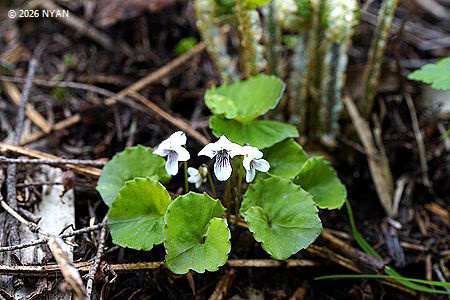
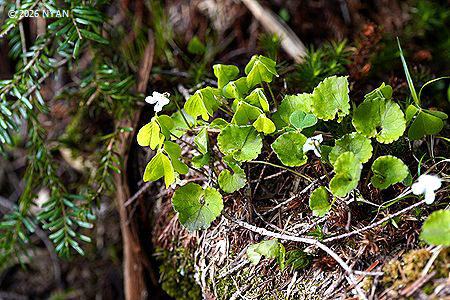
| Section | Plagiostigma Gordon | |
|---|---|---|
| Scientific Name | Type species |
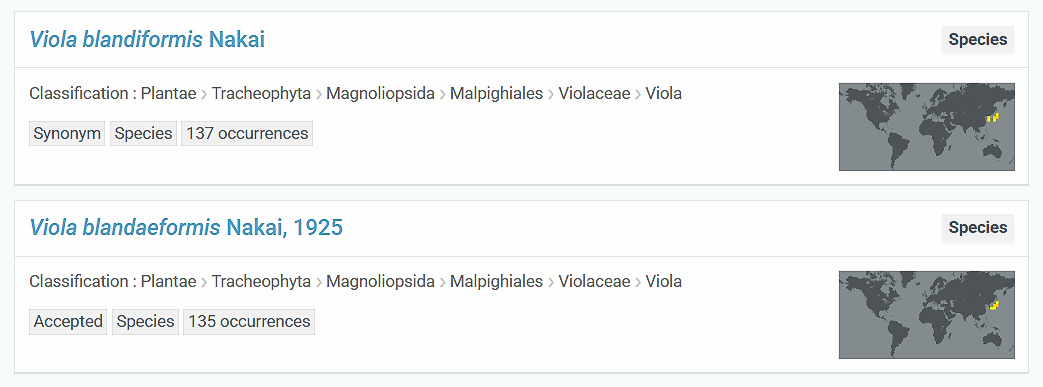
Viola blandiformis Naka : {Usuba Sumire} Published in: Bull. Soc. Bot. France 72: 192. (1925)
Viola blandaeformis * Nakai
|
| Variety | ||
| Form | ||
| Synonym |
Viola blanda Willd. var. violascens Nakai Published in: Bot. Mag. Tokyo 36: (58) (1922)
|
|
| Origin | blandaeformis: Shape is similar with Vola blanda. | |
| Common names | 【Korean】엷은잎제비꽃, 【English】Thin-leaf violet | |
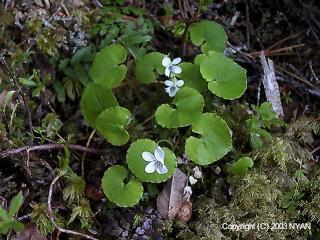
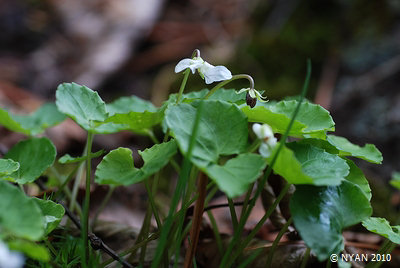
| Stalk Form | The individual leaves and flowering stalks emerge directly from the rootstock. | |
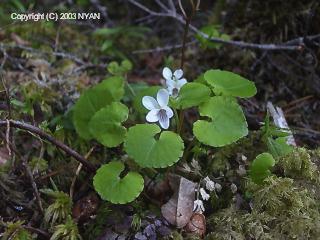
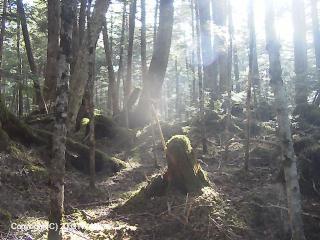
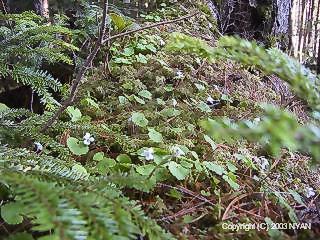
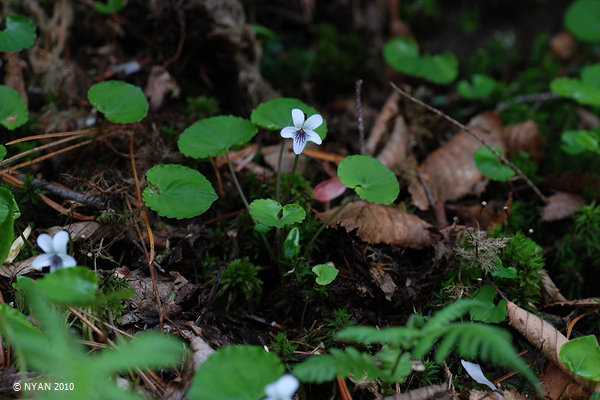
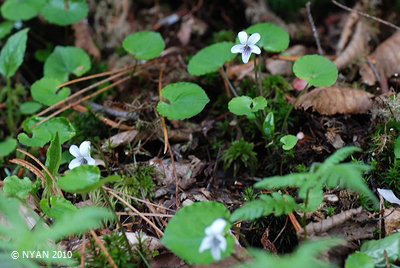
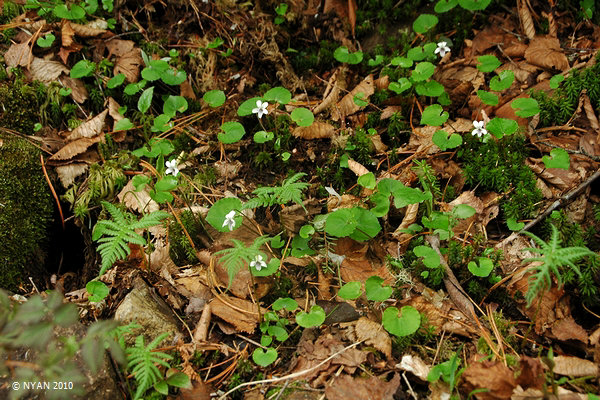
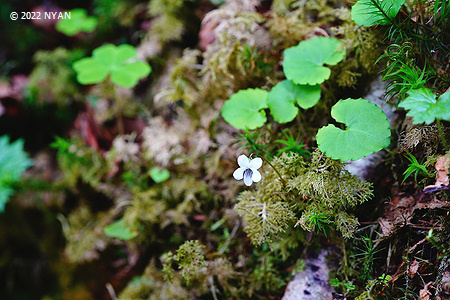
| Habitat | In Chubu District, it grows wild under the needle-leaf forest in the sub-high mountain. It sees at the humid place in which the moss grows. | |
| Distribution | Japan domestic | Restrictively distributed from Hokkaido to Chube District. |
| Japan overseas | Japanese endemic species. | |
| Others | (there is also information that are native to Korea) | |
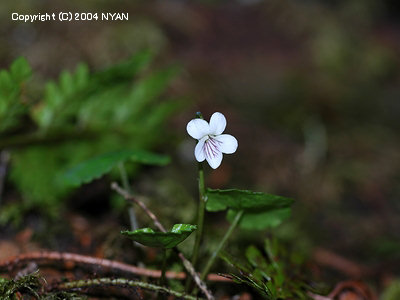
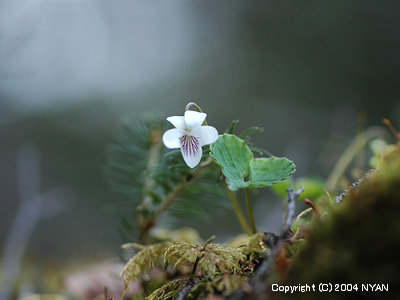
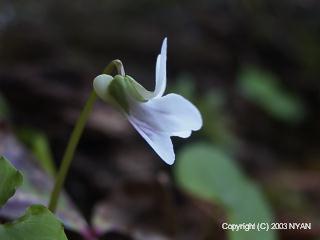
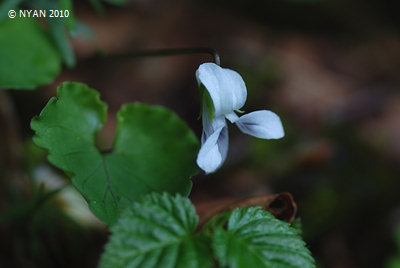
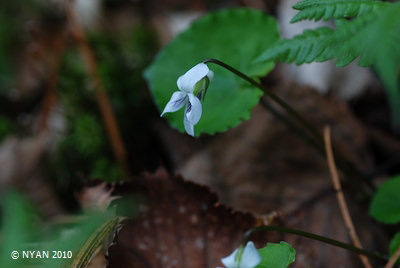
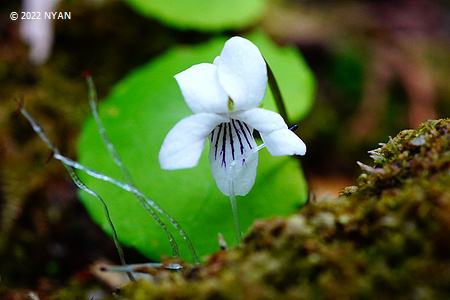
| Flower | Shape | Middle size. The upper valve is warped. The side valve is hairless (rarely hairy). |
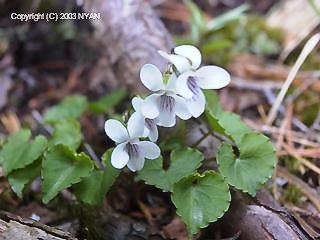
| Color | Pale white flower. Purple stripes enter the labellum. | |
| Spur | White, round and short. | |
| Season | Late (June-July). | |
| Stigma | Thin rod or small inverted triangle. | |
| Aromatic | ||
| Others | The calyx is narrow-ovate, and the appendages are all edges. | |
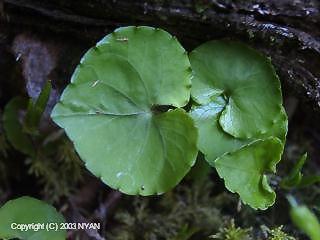
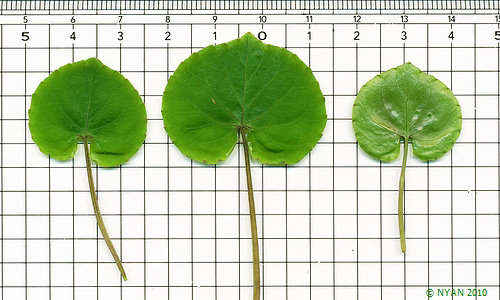
| Leaf | Shape | 25 - 40mm long x 25 - 40mm wide. The low saw teeth overlap like a fold. |
| Color | Bright green. The back side is glossy. | |
| Others | Hairless and thinly soft. | |
| Seed | Shape | Obovate. |
| Color | Milky white to yellowish white. | |
| Others | The smaller capsules have brown spots similar to Viola keiskei. | |
| Characteristics of roots | The rhizome is thick and short, and slightly thickened. | |
| Endangered Information | Akita:EndangeredⅡ, Fukushima:Near-threatened species, Niigata:Regional population, Saitama:EndangeredⅡ, Gifu:EndangeredⅠ | |
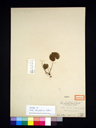
| Type Specimen | Mt. Nyoho(Nikko, Pref. Tochigi, 1901), Mt. Goyo, Mt. Iwate, Mt. Iwaki, Mt. Yatugatake, Mt. Hakkouda and Mt. Iwaki etc.. | |
| Chromosome Number | 2n=24 | |
| Reference Information | ||
| Others | ||