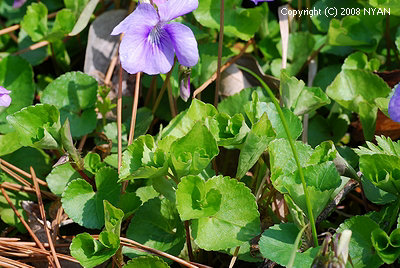
| Section | Trigonocarpae Gordon | |
|---|---|---|
| Scientific Name | Type species | Viola kusanoana Makino : {Oo-tachitubo Sumire} First published in Bot. Mag. (Tokyo) 26:173 (1912) |
| Form |
Viola kusanoana f. alba Masamune : {Sirobana Oo-tachitubo Sumire} First published in J. Geobot. 8: 22 (1959)
Viola kusanoana f. rosea Nagasawa : {Momoiro Oo-tachitubo Sumire}
Viola kusanoana f. brevicalcarata (H.Hara) F.Maek. : {Hidaka Tatitubo Sumire}
(Classification not possible. Should it be classified?)
Viola kusanoana f. subrosea H. Igarashi : {Salirairo Oo-tachitubo Sumire} First published in J. Jap. Bot.,75(3): 186 (2000)
|
|
| Synonym |
Viola dageletiana Nakai
Viola insularis Nakai
Viola kusanoana var. glabra Nakai
Viola silvestriformis W.Becker First published in Beih. Bot. Centralbl., Abt. 2, 34:242. (1916)
Viola mutsuensis W. Becker First published in Beih. Bot. Centralbl., Abt. 2, 34:241. (1916)
|
|
| Origin | kusanoana : originating in a name of person: Mr. Shunsuke Kusano (fungiologist). | |
| Common names | 【Korean】큰졸방제비꽃 | |
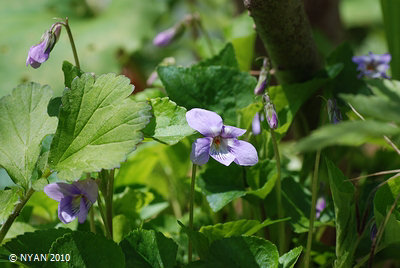
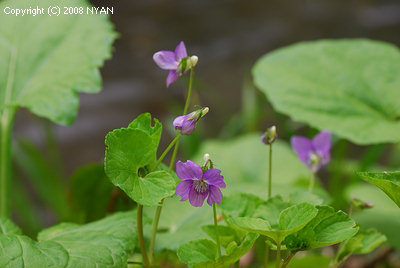
| Stalk Form | A flower scape is extended from a stalk, and a flower blooms from each scape. | |
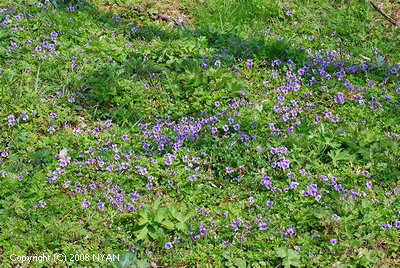
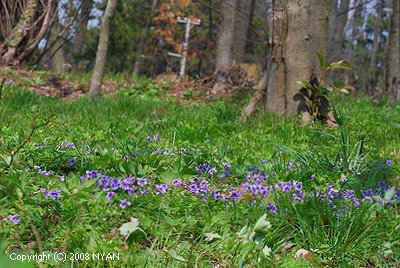
| Habitat | It grows wild under the bright wood of mountain. | |
| Distribution | Japan domestic | The region of heavy snows in North Japan to San-in. It is said that the habitat was almost corresponding to the region of the maximum snowfall 50cm or more. |
| Japan overseas | East Asia, Sakhalin (Kurile Islands), the Korean Peninsula (Kyongsang puk), the China northeast part. | |
| Others | In rare cases, there are documents that describe "Viola kusanoana is Japan's endemic species." Certainly, there are very few overseas documents. The description of this site follows the report of Eisuke Hama and the overseas database. | |
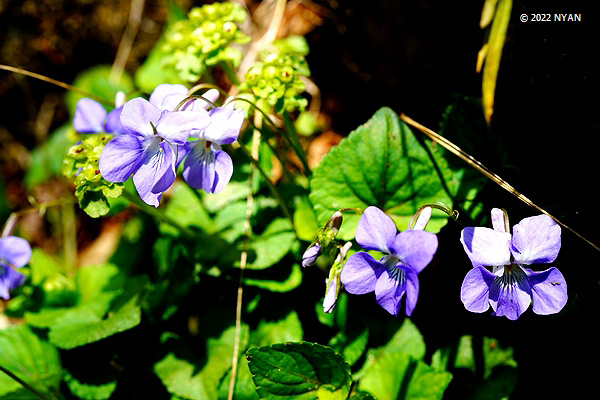
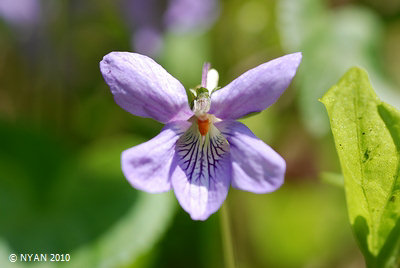
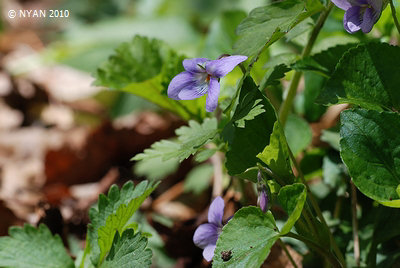
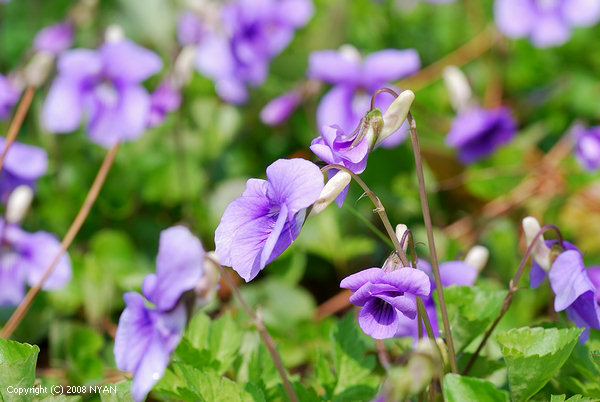
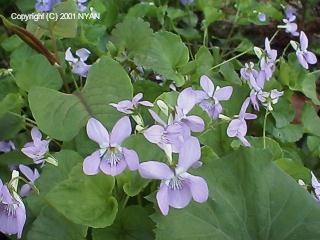
| Flower | Shape | Large size. |
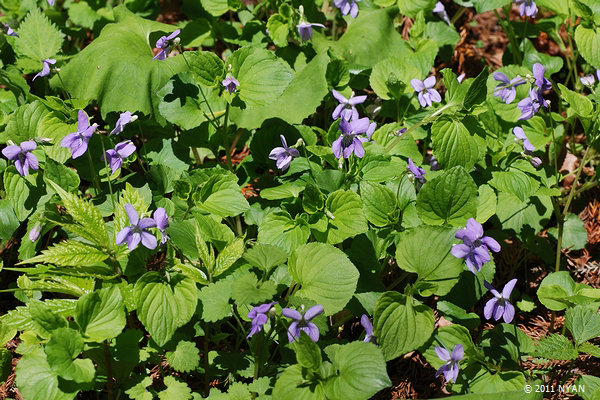
| Color | Generally, light purple. | |
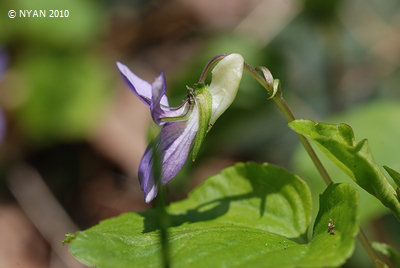
| Spur | White. | |
| Season | Long (from March to June). | |
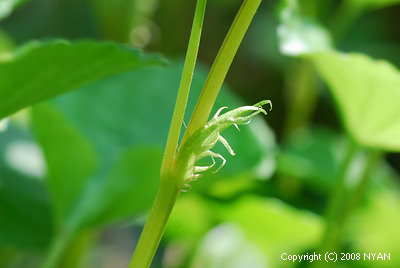
| Stigma | Rod shape. | |
| Aromatic | There are individual differences. | |
| Others | ||
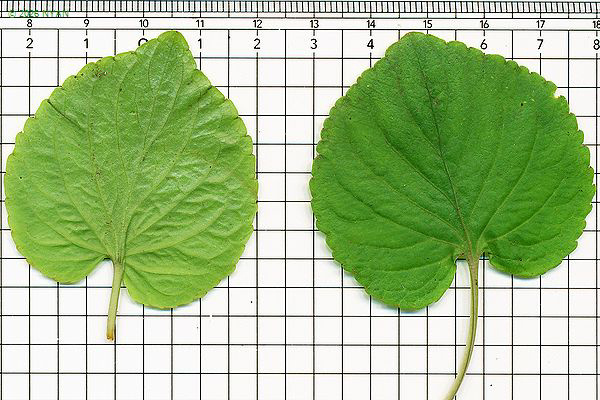
| Leaf | Shape | Egg shape. The venation is dented. |
| Color | Both sides are dark green. | |
| Others |
|
|
| Seed | Shape | |
| Color | ||
| Others | ||
| Characteristics of roots | ||
| Endangered Information | Aich:ThreatenedⅠ, Tokushima:ThreatenedⅠ | |
| Type Specimen | Sapporo, Aomori, Yamagata, Shimane | |
| Chromosome Number | 2n=20 | |
| Reference Information | ||
| Others | In early stages of the flower season, the leaf is round from both ends in many cases. | |